The honest answer is that it depends. Most wrongful death lawsuits in Illinois resolve somewhere between 1 and 4 years. Simpler cases with clear liability can settle in under a year. Cases involving disputed fault, multiple defendants, or complex damages can run considerably longer.
This article walks through the full timeline — the stages of a wrongful death lawsuit in Illinois, the factors that accelerate or delay resolution, the 2-year filing deadline under Illinois law, and why the first settlement offer you receive is rarely your best one.
TLDR: Key Takeaways
- Most Illinois wrongful death cases resolve in 1 to 4 years, with straightforward cases settling in as few as 6–12 months
- Discovery is typically the longest single phase — often 6 to 18 months
- Illinois law gives families exactly 2 years from the date of death to file under 740 ILCS 180/2
- Early insurance settlement offers rarely cover the full scope of damages, including pain, suffering, and loss of companionship
- Retaining a wrongful death attorney early protects your claim and prevents costly mistakes during the filing window
How Long Does a Wrongful Death Lawsuit Take in Illinois?
No two cases follow the same path. That said, most wrongful death lawsuits in Illinois fall into a predictable range based on how they resolve.
Settlement vs. Trial
The vast majority of civil tort cases never reach a jury. Most wrongful death cases settle before trial, and settlement cases move faster — though "faster" still typically means 12 to 24 months from filing to resolution.
Cases that go to trial take longer, often 3 or more years from the initial filing. Court scheduling backlogs in counties like Cook or DuPage can add 6 to 18 months beyond what a settlement would have required.
When Money Actually Arrives
One point families often overlook: reaching a settlement or verdict doesn't mean the check arrives the next week. After resolution, there are additional steps:
- Lien resolution — healthcare providers, Medicare, and Medicaid may have recovery rights against the settlement
- Probate distribution — proceeds must be distributed through the estate according to Illinois law
- Beneficiary coordination — especially when there are minor children or multiple surviving relatives
These steps can add weeks to months before funds actually reach the family.
Why Rushing Costs Money
The pressure to resolve quickly is understandable. But cases that close fast often close cheap. Skilled wrongful death attorneys push for efficiency, but never at the expense of full compensation — because lowball early settlements can't be reopened once accepted.
Stages of a Wrongful Death Lawsuit in Illinois
A wrongful death case moves through several distinct phases. Each has its own timeline, and delays in one phase ripple forward into the next.
Investigation and Evidence Gathering
Before any lawsuit is filed, the attorney investigates the death by gathering police or incident reports, medical records, witness statements, and expert opinions needed to establish liability and quantify damages.
Timeline varies significantly:
- Straightforward cases (clear-cut auto accident, for example): a few weeks to two months
- Complex cases (workplace incidents with multiple contractors, product defects): several months
Evidence disappears fast. Surveillance footage gets overwritten, witnesses become harder to locate, and electronic data from vehicles or worksites can vanish without prompt action.
Filing the Lawsuit
Under Illinois law, a wrongful death action must be filed by and in the name of the personal representative of the deceased's estate (typically a surviving spouse, parent, or adult child appointed by the court).
If no probate estate has been opened, that process must be initiated first. This adds time before the lawsuit can move forward, which is one reason families benefit from contacting an attorney early rather than waiting.
Discovery Phase
Discovery is almost always the longest phase: a formal, court-supervised exchange of evidence between both sides.
Under Illinois Supreme Court Rule 218, courts schedule a case management conference within 35 days after the parties are at issue and no later than 182 days after the complaint, with discovery completed at least 60 days before the anticipated trial date.
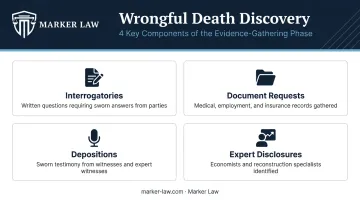
In practice, discovery in wrongful death cases commonly involves:
- Interrogatories — formal written questions each side must answer
- Document requests — medical records, employment records, insurance policies, incident reports
- Depositions — sworn testimony from witnesses, treating physicians, and expert witnesses
- Expert disclosures — economists, medical professionals, accident reconstruction specialists
Opposing counsel can slow this phase through disputed document requests, scheduling conflicts for depositions, or motions over the scope of disclosure. Multiple defendants or insurers compound this significantly.
Negotiation and Mediation
Once discovery is substantially complete, both sides have enough information to negotiate seriously. In Cook County, court-annexed mediation rules require mediation to be completed within 7 weeks of the first session unless extended. Many cases resolve at this stage without ever reaching a jury.
Mediation involves a neutral third party, often a retired judge or senior litigator, who facilitates discussion without issuing rulings. Neither side is obligated to accept any offer.
Trial (If Necessary)
If negotiations fail, the case proceeds to trial. Civil wrongful death trials can run from a few days to several weeks depending on complexity. The wait for a trial date in Illinois, particularly in Cook County, where docket backlogs are common, can add another 6 to 18 months to the overall timeline.
Appeals
Either party may appeal a trial verdict, adding another 1 to 2 years to the process. Appeals require a notice of appeal within 30 days of final judgment under Illinois Rule 303. Courts don't grant appeals automatically; they require identifiable legal errors from the trial itself.
Factors That Shorten or Extend Your Case Timeline
Several variables determine whether your case moves in 12 months or 3+ years.
Liability Clarity
When fault is obvious — a driver who ran a red light, a property owner who ignored a documented hazard — cases settle faster. When liability is genuinely disputed, more investigation, expert testimony, and litigation is required.
Number of Defendants
Cases involving multiple responsible parties take longer. Each additional defendant means another insurer, another legal team, and more coordination across competing interests. Multi-party cases — such as a trucking company and its driver, or multiple contractors on a construction site — extend the discovery and negotiation phases considerably.
Insurance Company Tactics
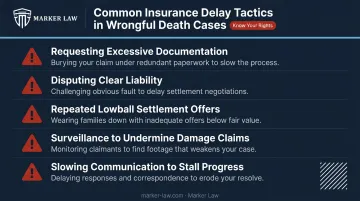
Insurers are motivated to minimize payouts, and they know how to use the legal process to their advantage. Common delay tactics include:
- Requesting duplicate or excessive documentation
- Disputing liability even when evidence is clear
- Making repeated lowball offers designed to wear down grieving families
- Using surveillance in an attempt to undermine damage claims
- Slowing communication to stall progress
Having spent three years on the defense side representing employers and insurance carriers, Jason Marker understands exactly how insurers approach wrongful death claims — and builds strategy around countering those moves from the start.
Size and Complexity of Damages
Beyond liability, the scope of what your family lost directly shapes how long the case takes. Cases involving significant lost future income, the permanent loss of a primary breadwinner, or damages to minor children require careful economic analysis and expert testimony. That work takes time, but it's what separates a fair recovery from whatever number an insurer floats first.
Family-Side Factors
Practical steps families can take to avoid preventable delays:
- Contact an attorney promptly — don't wait months after the death
- Respond to your attorney's document requests quickly
- Gather financial and employment records for the deceased if possible
- Don't accept any settlement offer before consulting an attorney
Why You Should Think Twice Before Accepting an Early Settlement Offer
Insurance companies often contact grieving families shortly after a death with a settlement offer. These early offers are calculated to close the case cheaply — before the family has had time to understand the full scope of their losses.
Signing a settlement agreement ends the case. Permanently. Even if the family later discovers that their losses were far greater than the offer covered, they cannot go back for more.
What Illinois Wrongful Death Damages Actually Include
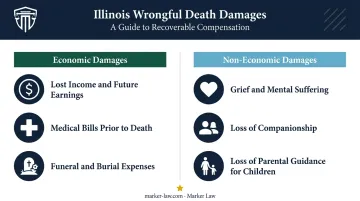
Under 740 ILCS 180/2, Illinois wrongful death damages include both economic and non-economic losses:
Economic damages:
- Lost income and future earning capacity
- Medical bills incurred before death
- Funeral and burial expenses
Non-economic damages:
- Grief, sorrow, and mental suffering (expressly included under Illinois statute)
- Loss of companionship and emotional support
- Loss of parental guidance for minor children
Early offers typically undervalue non-economic damages, or exclude them entirely. Because these losses are harder to quantify, insurers count on families not knowing what they're owed. An experienced wrongful death attorney can calculate the full damages picture — economic and non-economic — before any agreement is signed, so families don't settle for less than Illinois law actually allows.
Marker Law handles wrongful death cases on a contingency fee basis — families pay nothing unless compensation is recovered. A free consultation carries no cost and no obligation.
Illinois Statute of Limitations for Wrongful Death Claims
Under 740 ILCS 180/2, families have 2 years from the date of death to file a wrongful death lawsuit. Courts enforce this deadline strictly — missing it means permanently losing the right to pursue compensation, no matter how strong the underlying case.
Two years can feel like plenty of time. It isn't, once you account for the investigation, identifying all responsible parties, opening a probate estate, and building a thorough case. Families who wait often find that evidence has disappeared, witnesses are harder to locate, and their attorney has far less time to develop the claim properly.
Limited exceptions exist, but they're narrow:
- If a person entitled to recovery is under 18 when the action accrues, that person may bring the action within 2 years of turning 18
- If a liable party fraudulently concealed the cause of action, the action may be commenced within 5 years after discovery under 735 ILCS 5/13-215
These exceptions apply in limited circumstances — don't assume one covers your situation without verifying with an attorney.
Contact Marker Law as soon as your family is ready. Consultations are free, there's no fee unless compensation is recovered, and starting early gives your case the best foundation.
Frequently Asked Questions
What is the average wrongful death settlement in the US?
Wrongful death settlements vary enormously based on case type, jurisdiction, liability, and the specific damages at stake — ranging from tens of thousands to several million dollars. There is no national average that applies to any individual case. What matters is the specific economic and non-economic losses provable in your situation.
What are signs of a good settlement offer?
A fair offer covers all economic losses (lost income, medical bills, funeral costs), non-economic damages (companionship, emotional support, parental guidance), and the long-term financial impact on surviving dependents. Be cautious of offers that arrive before your full damages are calculated or that ignore future lost income — insurers often move fast precisely to limit what they pay.
What is the success rate of wrongful death lawsuits?
The majority of wrongful death cases resolve through settlement rather than trial. Success depends on the strength of evidence, the experience of the attorney, and the specific facts of the case. Nationally, only about 4% of tort cases ever reach a jury verdict — most cases settle long before that.
How much will I get from a $50,000 settlement?
From a $50,000 settlement, attorney fees (typically one-third), case expenses, and any outstanding medical liens or Medicaid obligations come out before the family receives a check. Depending on those deductions, the net amount can be significantly less than the headline figure.
How long do I have to file a wrongful death lawsuit in Illinois?
Illinois law gives families 2 years from the date of death to file a wrongful death claim under 740 ILCS 180/2. This deadline is strictly enforced, and exceptions are narrow. Contact a wrongful death attorney as soon as possible — the earlier the investigation begins, the stronger the case.